
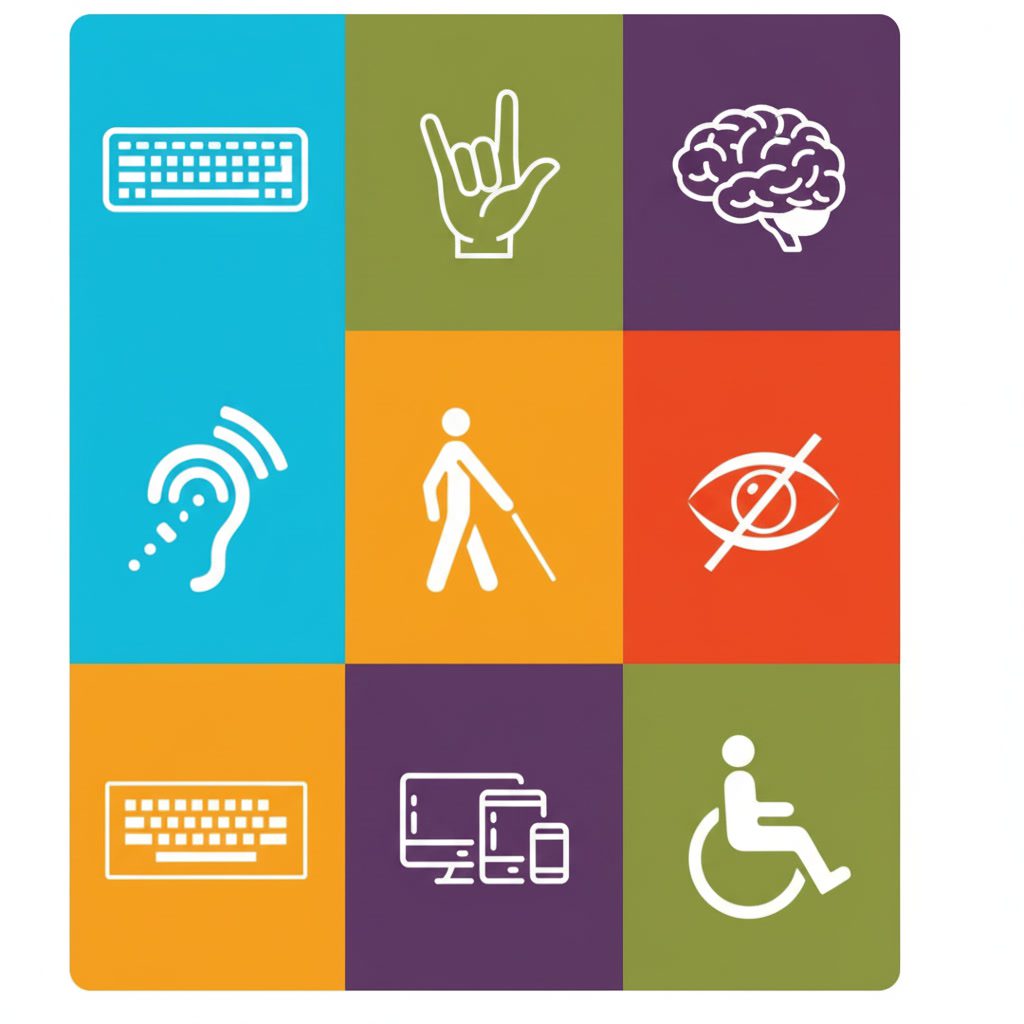
Imagine trying to apply for government benefits online, only to discover the application form can’t be read by your screen reader. Or attempting to renew your driver’s license using only a keyboard because you have limited mobility—but the website simply doesn’t let you navigate past the first page.
For millions of Americans living with disabilities, these aren’t hypothetical situations. They’re everyday experiences.
As government services continue shifting online, digital accessibility has become just as important as wheelchair ramps, elevators, and accessible parking spaces. Citizens expect to pay taxes, apply for permits, access court records, submit public records requests, and interact with government agencies without stepping into an office. If those digital services aren’t accessible, agencies aren’t serving everyone equally.
That’s why ADA compliance for government agencies is no longer something that can wait until the next website redesign or software upgrade. It’s a legal obligation, a public service responsibility, and increasingly, a defining factor in successful digital transformation.
The agencies that prioritize accessibility today won’t just reduce legal risk—they’ll build stronger public trust, deliver better citizen experiences, and create digital services that work for everyone.
Digital Accessibility Is No Longer Optional
For years, accessibility conversations focused primarily on physical infrastructure. Installing ramps, widening doorways, and adding accessible parking spaces were visible signs of compliance.
Today, accessibility has moved online.
Government websites, citizen portals, online applications, document repositories, payment systems, and case management platforms have become the new front doors of public service. If these digital experiences exclude people with disabilities, agencies are creating barriers just as real as a locked building entrance.
The Americans with Disabilities Act (ADA) and Section 508 of the Rehabilitation Act establish the foundation for accessible public services, while the Web Content Accessibility Guidelines (WCAG) provide the internationally recognized framework for building accessible digital experiences.
For government organizations, accessibility isn’t simply about avoiding complaints—it’s about ensuring every resident has equal access to critical services.
The Cost of Ignoring ADA Compliance Keeps Growing
Many agencies assume accessibility improvements can wait until the next modernization initiative. Unfortunately, waiting often makes the problem significantly more expensive.
Accessibility issues don’t disappear over time. They compound.
Legacy websites accumulate inaccessible PDFs. Older applications become harder to maintain. New features are added without considering screen readers or keyboard navigation. Eventually, fixing accessibility becomes a large-scale remediation project rather than a routine improvement.
The result?
Higher redevelopment costs
Larger accessibility gaps
More technical debt
Increased project timelines
Greater legal exposure
Building accessibility into digital services from day one is almost always more cost-effective than retrofitting an entire ecosystem years later.
Lawsuits Are Increasing—But Legal Risk Isn’t the Only Concern
ADA compliance is often discussed only in terms of lawsuits.
Yes, litigation involving inaccessible websites has increased significantly over the past several years. Government organizations are facing growing scrutiny over digital accessibility, particularly as more public services move online.
But focusing solely on legal risk misses the bigger picture.
Every inaccessible website represents a citizen who couldn’t complete an application.
Every inaccessible PDF is someone unable to access important information.
Every inaccessible online form creates unnecessary dependence on phone calls or in-person assistance.
Accessibility isn’t just about compliance.
It’s about public service.
Accessibility Creates Better Digital Experiences for Everyone
One of the biggest misconceptions about accessibility is that it only benefits people with permanent disabilities.
In reality, accessible design improves usability for everyone.
Think about how people interact with government websites today.
Someone might be:
Completing forms on a mobile device.
Using voice commands while driving.
Viewing content outdoors in bright sunlight.
Recovering from a temporary injury.
Experiencing age-related vision loss.
Navigating with limited internet bandwidth.
Features originally designed for accessibility often improve the experience for every user.
Examples include:
Clear navigation menus
Better color contrast
Larger clickable buttons
Logical page layouts
Captioned videos
Plain language content
Mobile-friendly interfaces
In many cases, accessibility and user experience go hand in hand.
When citizens can quickly find information and complete tasks independently, agencies receive fewer support requests, experience lower operational costs, and improve overall public satisfaction.
Legacy Systems Are One of the Biggest Accessibility Challenges
Many government agencies continue relying on systems built a decade—or even two decades—ago.
These platforms often weren’t designed with modern accessibility standards in mind.
Common issues include:
Unreadable PDF forms
Poor keyboard navigation
Missing image descriptions
Low color contrast
Confusing page structures
Inaccessible data tables
Non-responsive layouts
Unsupported assistive technologies
Modernizing these systems isn’t just about adding new features.
It’s about removing barriers that prevent citizens from accessing essential services.
Digital transformation projects should treat accessibility as a foundational requirement—not an optional enhancement added near the end of development.
Accessibility Should Be Part of Every Government Technology Project
Whether an agency is implementing a citizen portal, modernizing a case management platform, or deploying workflow automation, accessibility should be embedded throughout the project lifecycle.
That includes:
Discovery workshops
User research
UX/UI design
Front-end development
Document creation
Quality assurance
User acceptance testing
Ongoing maintenance
Accessibility cannot be “tested in” during the final week of a project.
It has to be designed into every decision.
Organizations that integrate accessibility early consistently deliver higher-quality software while avoiding expensive remediation later.
Procurement Is Changing—Accessibility Is Now a Buying Requirement
Accessibility has become a standard evaluation criterion in government procurement.
Today’s Requests for Proposal (RFPs) increasingly ask vendors to demonstrate:
WCAG compliance
Section 508 compliance
VPAT documentation
Accessibility testing methodologies
Inclusive design practices
Ongoing compliance strategies
This shift reflects a broader understanding that accessibility isn’t simply a technical requirement—it is a measure of product quality.
Technology vendors that treat accessibility as a core capability are becoming preferred partners for government modernization initiatives.
Likewise, agencies that prioritize accessibility during procurement avoid costly surprises after implementation.
Accessibility Builds Public Trust
Government agencies don’t compete for customers.
They earn public trust.
Every interaction a resident has with a government website shapes that trust.
When digital services are confusing, inaccessible, or difficult to navigate, citizens often assume the agency itself is outdated or inefficient.
Conversely, accessible digital experiences communicate professionalism, inclusion, and accountability.
They demonstrate that every resident matters—not just those using the latest browser, fastest internet connection, or standard input devices.
Accessibility sends a powerful message:
Public services are designed for everyone.
What Does an Accessible Government Website Actually Look Like?
Accessibility isn’t about making dramatic visual changes.
Often, it’s the small details that make the biggest difference.
An accessible government website typically includes:
Keyboard-friendly navigation
Descriptive alternative text for images
Screen reader compatibility
Accessible online forms
Proper heading hierarchy
High color contrast
Captioned multimedia
Responsive layouts
Clear error messages
Plain, readable language
These features help ensure citizens can independently access services regardless of ability.
Accessibility Is an Ongoing Commitment—Not a One-Time Project
One of the most common mistakes agencies make is treating ADA compliance as a checkbox.
Accessibility isn’t something you complete once and forget.
Websites evolve.
Applications receive updates.
Documents are uploaded daily.
Content changes constantly.
Without regular audits, testing, and governance, even compliant systems can gradually become inaccessible.
The most successful agencies establish accessibility as an ongoing operational practice rather than a single compliance initiative.
How the Right Technology Partner Makes a Difference
Building accessible government technology requires more than automated testing tools.
It requires a deep understanding of user experience, modern development practices, accessibility standards, and the unique challenges government organizations face.
An experienced digital transformation partner can help agencies:
Assess existing accessibility gaps
Modernize legacy systems
Build WCAG-compliant interfaces
Design inclusive citizen experiences
Conduct manual and automated accessibility testing
Create long-term accessibility governance strategies
Maintain compliance as technology evolves
Accessibility becomes significantly easier—and far less expensive—when it’s integrated into every stage of software development.
The Time to Act Is Now
ADA compliance isn’t simply about reducing legal exposure.
It’s about delivering government services that truly serve every citizen.
As public expectations continue to rise and digital services become the primary way people interact with government, accessibility can no longer be treated as an afterthought.
Agencies that invest in accessible technology today will be better prepared for tomorrow’s regulations, modernization initiatives, and citizen expectations.
More importantly, they’ll build digital experiences that are inclusive, resilient, and designed for everyone.
Building Accessible Digital Government with Azul Arc
At Azul Arc, we help government agencies modernize legacy systems, build secure citizen-facing applications, and deliver digital experiences that are accessible by design. Whether it’s a case management platform, workflow automation solution, self-service portal, or custom government application, accessibility is integrated into every stage of our development process—not added as an afterthought.
Because digital transformation should improve access for everyone.
And when government technology is truly inclusive, everyone benefits.