
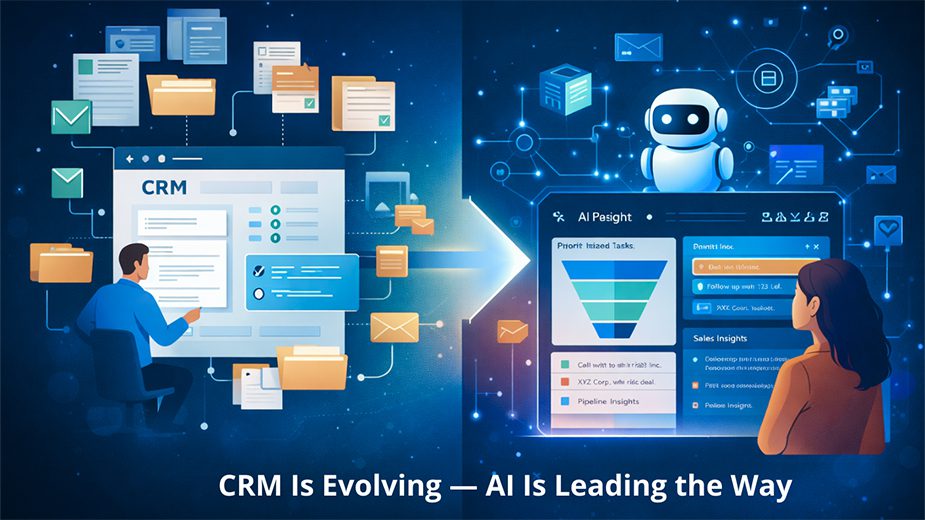
Customer Relationship Management (CRM) platforms have long been the backbone of modern sales and customer operations. For decades, businesses have relied on CRM systems to store customer data, track interactions, manage pipelines, and support decision-making.
Yet despite their importance, many organizations still struggle with a common problem: traditional CRMs require too much manual work to remain effective.
Recently, the emergence of AI-native CRM platforms has sparked renewed conversation around the future of customer relationship management. One notable example is Day AI, a startup that recently raised $20 million in funding from Sequoia Capital to build what it calls “the Cursor of CRM.”
The idea behind this concept is simple but powerful: instead of users constantly updating their CRM, the CRM should work alongside users—automating data capture, surfacing insights, and assisting teams in real time.
This shift reflects a broader transformation in enterprise software. Businesses are increasingly looking for intelligent systems that actively support workflows, rather than tools that simply store information.
The Challenges of Traditional CRM Systems
CRM platforms such as HubSpot, Salesforce, and others have become essential components of modern sales operations. They centralize customer data, track deal progress, and help teams manage relationships at scale.
However, even the most widely adopted CRM systems face recurring challenges:
1. Heavy Reliance on Manual Data Entry
One of the most common complaints among sales and operations teams is the amount of time required to keep CRM records updated. Logging emails, updating deal stages, entering notes, and tracking activities often becomes a daily administrative burden.
When teams fail to keep data updated, CRM systems quickly lose reliability.
2. Low User Adoption
Because of the manual effort involved, many teams only partially use their CRM platforms. Data becomes fragmented, reports become inaccurate, and leadership loses visibility into real pipeline performance.
3. Outdated Data and Insights
Customer relationships evolve quickly. When CRM updates depend on manual entry, the system often reflects outdated information. This limits its ability to support strategic decision-making.
4. Complex Workflows
Over time, CRM systems accumulate layers of customization, integrations, and processes. What starts as a simple tool often becomes complex to navigate and difficult to maintain.
These challenges have led many organizations to rethink how CRM platforms should function in a modern, AI-enabled business environment.
The Rise of AI-Native CRM Platforms
AI-native CRM systems are designed to address many of the limitations of traditional tools by embedding artificial intelligence directly into the workflow.
Rather than acting as a passive database, these systems aim to become active collaborators in the sales and relationship management process.
Key capabilities often include:
Automated Data Capture
AI can automatically log interactions from emails, meetings, and communications. This reduces the need for manual updates and ensures data remains current.
Intelligent Recommendations
AI assistants can suggest next steps, identify potential risks in deals, or highlight opportunities that might otherwise be overlooked.
Real-Time Insights
Instead of relying solely on reports generated after the fact, AI-enabled platforms can surface insights as teams work.
Conversational Interfaces
Users can interact with the system through prompts or queries, similar to working with an AI assistant, making information retrieval faster and more intuitive.
This shift from data entry to intelligent assistance is one of the most significant changes occurring in enterprise software today.
Why Companies Are Exploring AI-Driven Alternatives
The demand for AI-native CRM solutions is not just theoretical—it is already influencing real-world technology decisions.
For example, Stable Kernel has reportedly begun testing Day AI as a potential replacement for HubSpot. While the company continues to maintain its existing CRM during the transition, early results from the AI-driven platform have reportedly been promising.
Experiments like this highlight an important trend: organizations are becoming more open to re-evaluating legacy platforms if newer technologies can deliver measurable improvements in efficiency and insight.
For many teams, the question is no longer whether AI will influence CRM platforms—but how quickly the transition will occur.
Beyond CRM: A Shift Toward Intelligent Business Platforms
The emergence of AI-native CRM tools also reflects a larger transformation happening across enterprise technology.
Businesses are moving beyond traditional software categories toward intelligent platforms that support entire workflows.
Instead of using separate tools for:
- data management
- analytics
- communication
- task tracking
Organizations are increasingly looking for integrated systems where data, automation, and insights work together.
In this environment, AI plays a central role by enabling systems to:
- interpret large volumes of operational data
- surface meaningful insights automatically
- automate repetitive processes
- assist teams in making better decisions faster
CRM platforms are simply one area where this transformation is becoming visible.
What This Means for Businesses Evaluating Their CRM Strategy
As AI-native tools gain traction, companies evaluating their CRM strategy may begin to ask new questions:
- Can our CRM automate more of the data capture process?
- Are we using AI to generate actionable insights from our data?
- Is our CRM aligned with the way our teams actually work?
- Would a more tailored platform improve adoption and productivity?
For some organizations, improving the configuration of an existing CRM may be sufficient. For others, especially those with complex workflows or unique operational needs, custom digital platforms may offer greater flexibility and long-term value.
The Role of Custom Digital Solutions in the AI Era
While off-the-shelf CRM tools continue to evolve, many organizations are realizing that their workflows do not always fit neatly within standardized software models.
As businesses grow and processes become more specialized, custom digital solutions can provide significant advantages:
- workflows designed around real operational processes
- tailored automation aligned with internal systems
- improved user experience and adoption
- greater control over data and integrations
When combined with AI capabilities, custom platforms can move beyond traditional CRM functionality and support broader operational intelligence across teams.
Looking Ahead: CRM as an Intelligent Copilot
The next generation of CRM platforms will likely look very different from the systems organizations have relied on for the past decade.
Instead of acting primarily as data repositories, future platforms may function more like intelligent copilots that assist teams throughout their work.
These systems will not only store information but also help teams:
- understand customer behavior
- prioritize opportunities
- identify risks earlier
- automate routine tasks
- make faster, more informed decisions
The growing interest in AI-native CRM startups suggests that this shift is already underway.
A New Chapter in Customer Relationship Management
The funding of companies like Day AI signals an important moment in the evolution of CRM technology. As artificial intelligence continues to reshape enterprise software, organizations have an opportunity to rethink how they manage relationships, workflows, and operational data.
For businesses seeking greater efficiency, deeper insights, and more intuitive tools, the future of CRM may not simply involve adding AI features to existing systems—but reimagining the platform itself.
As technology continues to advance, one thing is clear: the next generation of CRM will likely focus less on data entry and more on empowering teams with intelligent, proactive systems that help them work smarter.