
December 23, 2025
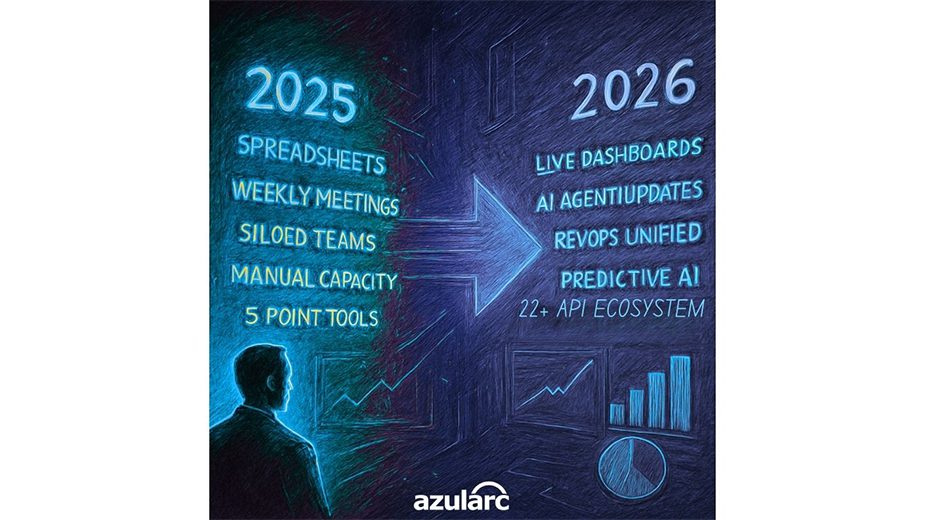
2025 was the year operations teams stopped firefighting and started future-proofing. Remote-hybrid work solidified, AI moved from experiment to expectation, and revenue ops ate marketing’s lunch. As we close out the year, here are the five trends US operations leaders must master for 2026.
1. AI Agents Replace 40% of Manual Workflows
Operations teams won’t manage tools in 2026—they’ll direct autonomous agents.
What’s happening: Gartner predicts 75% of enterprises deploy AI agents by Q3 2026, handling repetitive tasks like RFP tracking, vendor sync, lead routing, and compliance checks autonomously. Salesforce reports ops teams already saving 27 hours/week per person with agentic workflows.
For ops leaders:
- Shift from “tool selection” to “agent orchestration”
- Expect RFP requirements to demand “AI-ready” platforms by mid-year
- Early adopters: HubSpot, ClickUp, and Zapier leading with native agents
Azul Arc take: Our ops team cut manual lead qualification by 62% using multi-agent workflows this year. The real win? Human bandwidth freed for strategic vendor negotiations.
2. Hybrid Work Demands “Always-On” Collaboration
Status meetings die. Real-time dashboards become the single source of truth.
What’s happening: 83% of distributed teams report “meeting fatigue” blocking execution (McKinsey). Tools like ClickUp dashboards, Slack AI summaries, and Notion AI replace weekly syncs with live project pulse.
2026 reality:
Weekly Status Meeting → Live Capacity Dashboard
Email Threads → Slack AI Thread Summaries
Excel Tracking → ClickUp Custom Fields + Automations
For ops leaders:
- Implement “dashboard-first” communication by Q1
- Train teams on AI-powered async updates
- Measure by reduced meeting time (target: -40%)
3. Revenue Ops Takes Over Traditional Marketing
Siloed teams disappear. Unified RevOps owns pipeline + delivery end-to-end.
What’s happening: 68% of high-growth SaaS companies reorganized into RevOps by Q4 2025 (OpenView Partners). Marketing hands off lead gen; RevOps owns conversion through delivery handoff.
The new org chart:
Traditional | 2026 RevOps |
Marketing → Sales → Success | RevOps owns P&L |
Monthly pipeline reviews | Daily predictive forecasting |
MQL handoffs | Unified pipeline scoring |
For ops leaders: Own the full customer journey metric stack—CAC, LTV, churn, expansion. Marketing becomes a RevOps function.
4. Predictive Capacity Planning Goes Mainstream
AI forecasts headcount and bandwidth 6-12 months out. Ops owns workforce planning.
What’s happening: Float and Resource Guru report 92% accuracy in AI-driven capacity planning. Operations leaders now report to the CEO alongside the CFO, not just under marketing.
Key shifts:
- Q4 2025: Manual spreadsheets for hiring plans
- Q2 2026: AI models predict churn, ramp time, skill gaps
- Q4 2026: Ops dashboards show real-time bench vs. pipeline
Azul Arc implementation: Our ops team uses Float + ClickUp to maintain 92% utilization while scaling headcount without overhire.
5. Vendor Ecosystems Replace Point Solutions
Single-vendor stacks die. API-first ecosystems with 20+ integrations win.
What’s happening: G2 reports top-performing ops teams manage 22 integrations vs. 5 siloed tools for average teams. Zapier processes 7B+ tasks/month across 7,000+ apps.
The ecosystem stack:
Core: ClickUp (project mgmt) + HubSpot (CRM)
Orchestration: Zapier/Make + Slack AI
Analytics: Google Looker Studio + Float
Comms: Loom + GrammarlyGO
For ops leaders:
- Audit point solutions Q1 2026 (kill 30%+)
- Build “integration-first” evaluation criteria
- Target 90% automation coverage across workflows
The Ops Leader’s 2026 Playbook
- Q1: Deploy AI agents for top 3 manual workflows
- Q2: Launch dashboard-first async communication
- Q3: Restructure as RevOps (if not already)
- Q4: Scale predictive planning across all hiring
Azul Arc’s 2025 wins: Headcount growth, 92% capacity utilization, 62% automation lift, zero overhire. These trends weren’t predictions—they were our playbook.
Connect with us to discuss your 2026 capacity planning. Happy holidays from Azul Arc—what’s your biggest ops priority for next year?